
Work / Web, Branding
Ostraka
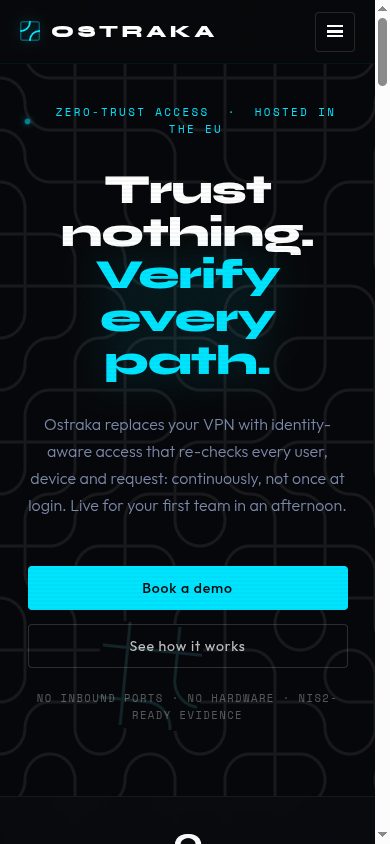
Name, identity and a shader-driven landing page for an Athens zero-trust security start-up.
Concept studies: fictional clients, real design and code.
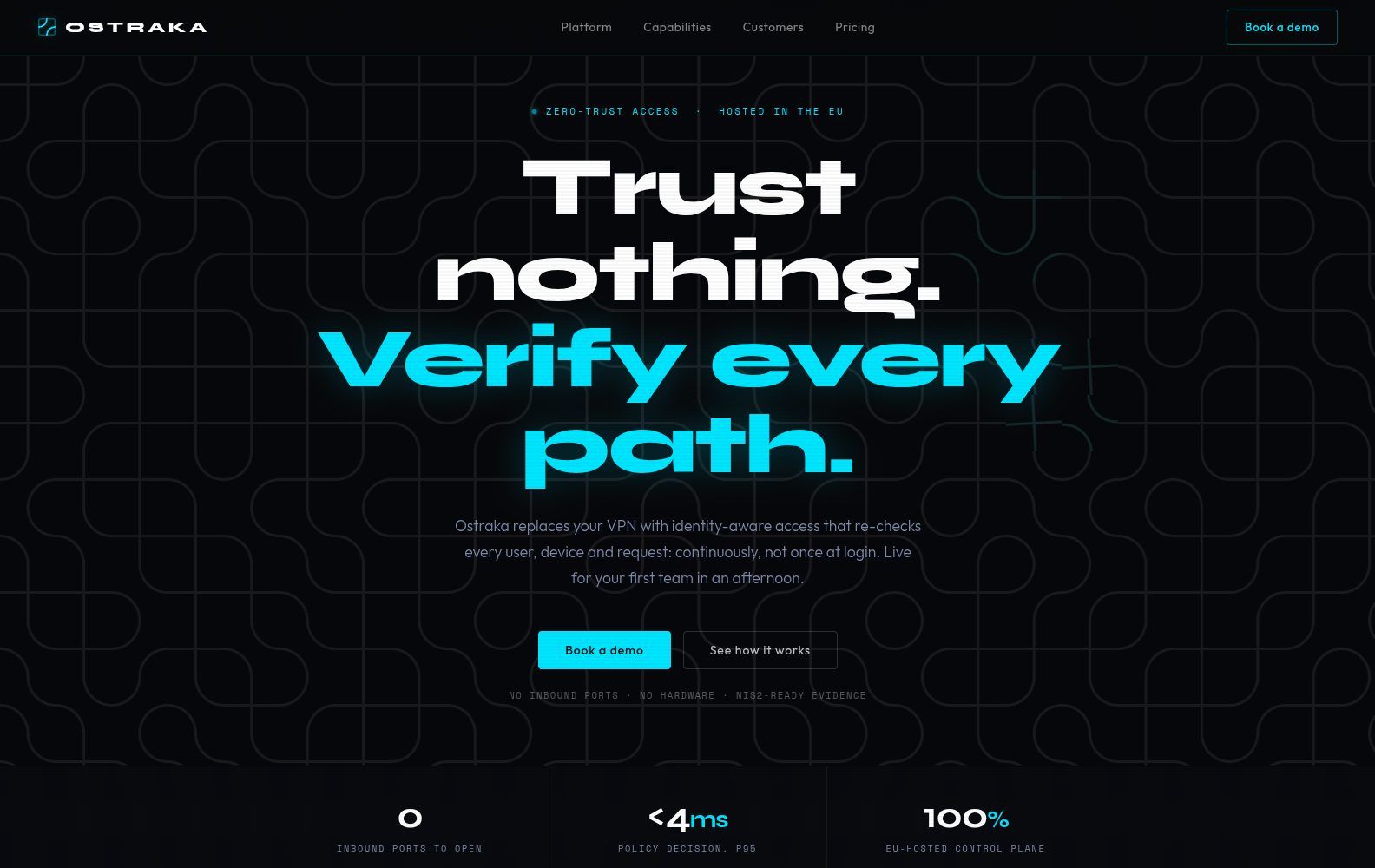
Fig. 01 · First screen
01Challenge
A strong VPN replacement, sold to IT leads facing NIS2 audits, behind a docs-theme site with a padlock hero.
It looked like every other vendor in the buyer's inbox. The site had to read as serious infrastructure and make one idea obvious at a glance: trust is re-checked continuously, not once at login.
02Approach
The scene on the page is the product idea, drawn as tiles.
A name with a history
Ostraka are the pottery shards Athenians used to vote people out. One sentence carried the page: access that re-checks every user, device and request. Everything else had to support it or go.
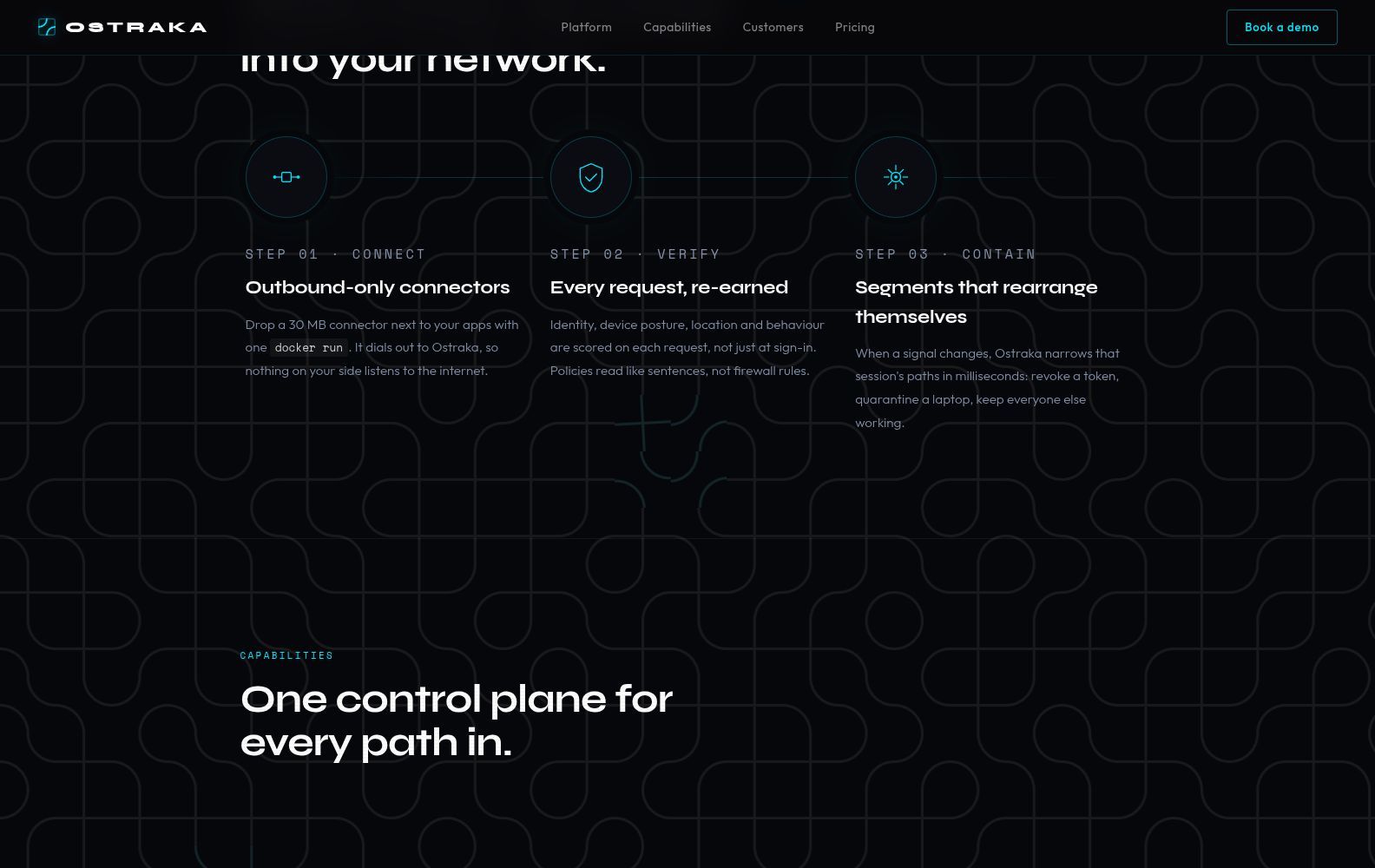
Micro-segmentation you can see
A live field of Truchet tiles keeps rotating and re-forming paths. Tiles near the pointer light up in cyan: the visitor is a verified identity lighting the routes around them.
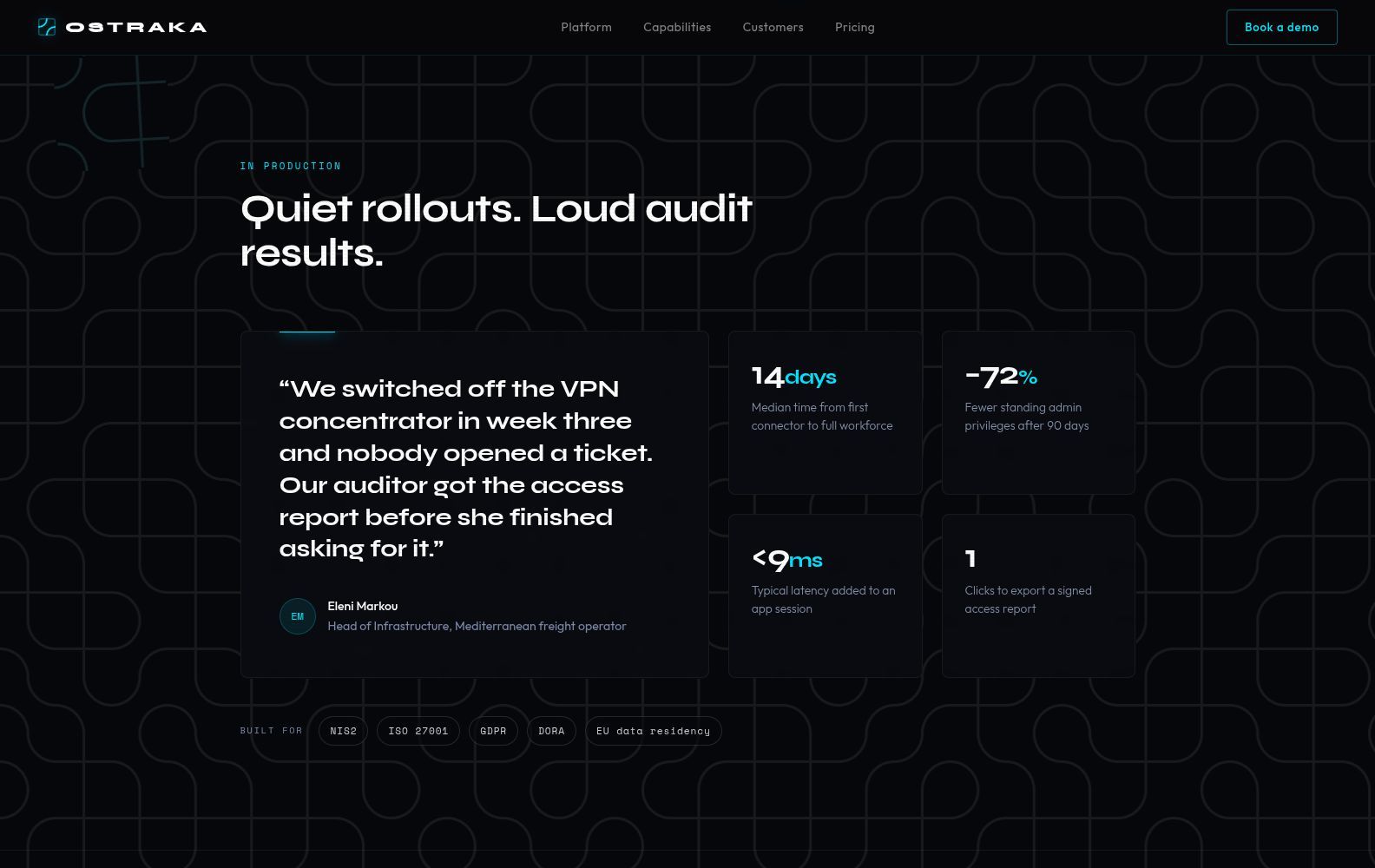
One file sales can send
A single self-contained page with a GLSL renderer and a Canvas fallback. Motion pauses for reduced-motion users and hidden tabs, and it holds up down to 320px wide.
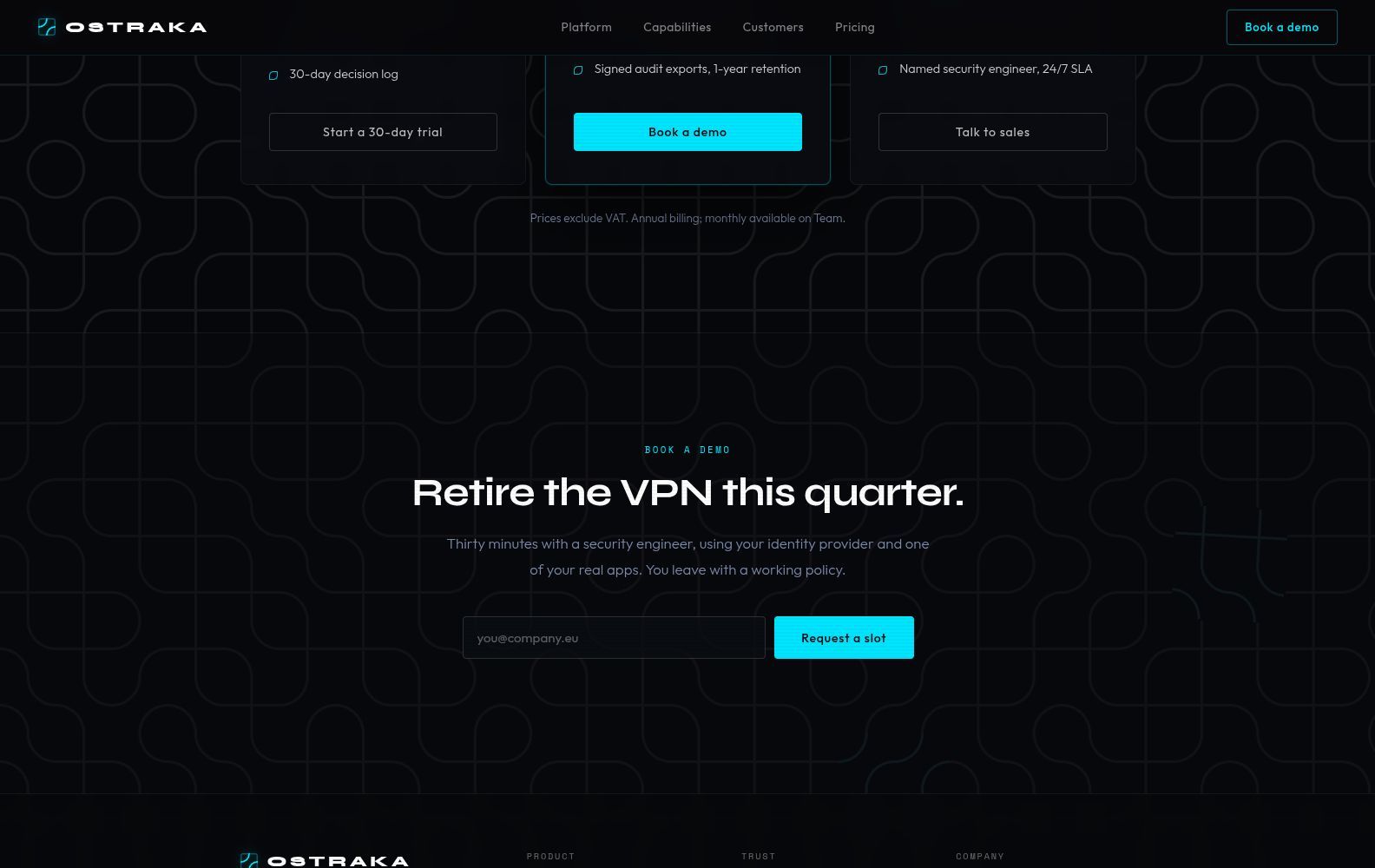
03Outcome
The tile mark and palette carry straight into the product UI and the decks, with no extra brand work.
- accent colour on near-black
- 1
- renderers: GLSL and a Canvas fallback
- 2
- pixels wide, smallest layout tested
- 320
What shipped
- Name and story
- Wordmark and tile mark
- Palette and type system
- Shader scene with pointer glow
- Landing page and copy
Note
Concept study. Ostraka, its customers and quotes are fictional.
Syneches Institute
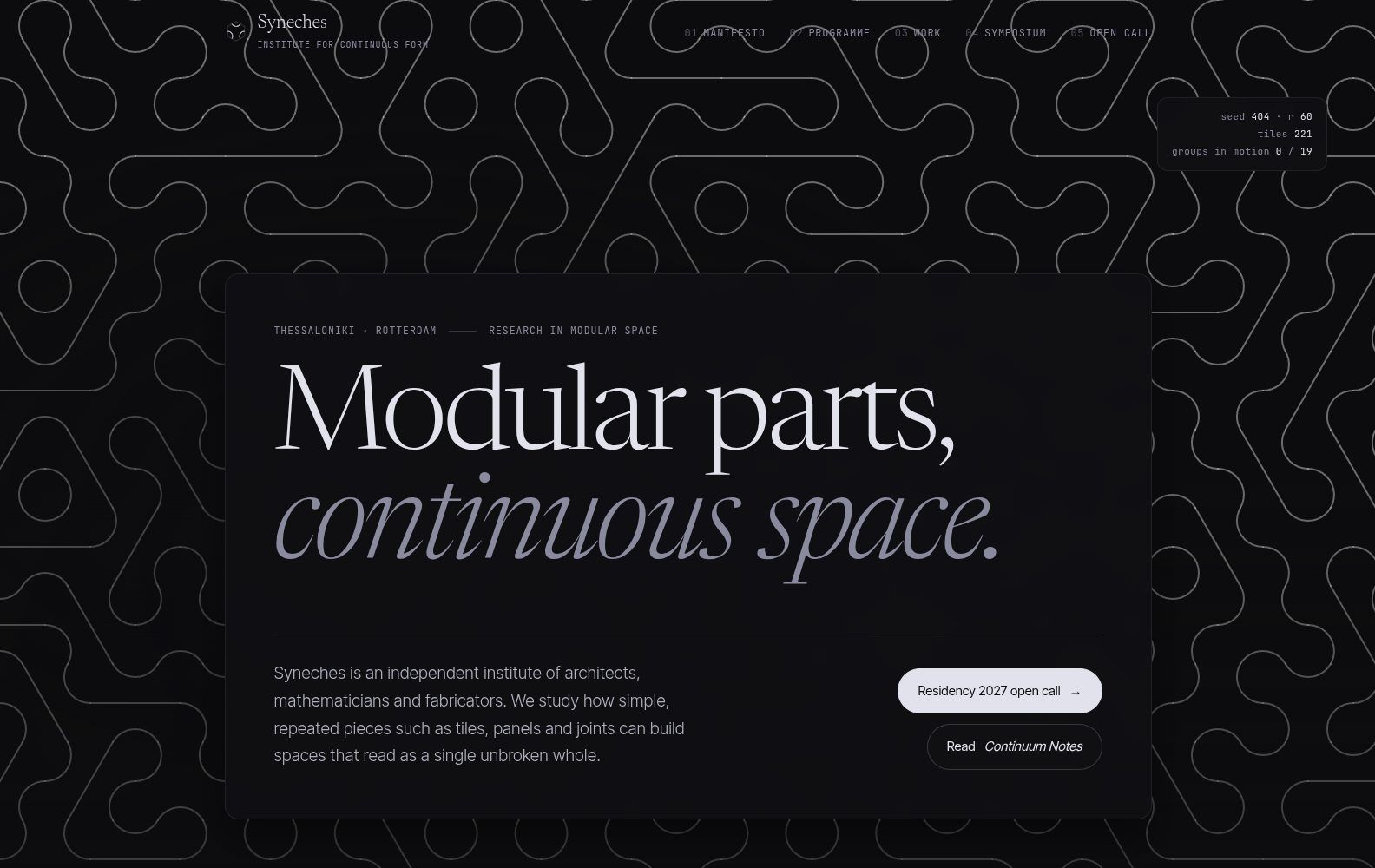
A generative identity for a research institute studying continuity in modular space.